"Order! Order! By this agenda one of our right honourable members has some business to raise. The Speaker recognises Lord Admiral Jellicoe."
A quiet murmering filled the room as the old man slowly and stiffly rose to his feet. Jellicoe was a respected, even esteemed member of the House of Lords, but at 76 he was well past active retirement from his command of the Suffolk Fleet, and it had been a good year since many of the Lords remembered hearing him speak in Parliament at all. The Lord Admiral cleared his throat loudly.
"My fellow Lords and, ah... Ladies..." he began, reading slowly from a pre-prepared speech with which it was abundantly clear that he did not even personally agree with so much as the opening sentence, "As you are well aware our fine nation of Bretonia has long been governed according to a combination of parliamentary convention and jolly good common sense. Ahem. However, it is felt in certain quaters...I mean, that is to say, I feel that the time has at last come for us to codify these excellent traditions, along with some new, more....progressive ideas, into a single document. This will, no doubt," he continued, clearly indicating that he in fact doubted it very much indeed, "greatly strengthen our Kingdom and Empire, both against the false claims of perfidious foreign Empires, and against the internal threats of dissidents, pretenders, and covert revolutionaries. My Lords, it is time for us to write up a Bretonian Constitution."
He sat down again, frowning and clearly slightly unsettled by the loud outbreak of noise from the other Lords on the reading of this final sentence. Jellicoe was, beyond doubt, one of the least likely of all members of the House to approve let alone conceive of such a radically progressive policy. It was blindling obvious to everyone that he was merely being used as a mouthpiece by powerful figures outside of Parliament, most probably his fellow members of the Admiralty Board and the Fleet Admiral, on whom he still relied for his large Admiral's salary. This suspicion was confirmed when Lord Admirals Fairfax and Cunningham, the other two incumbents on the Admiralty Board with seats in Parliament, immediately rose to their feet and declared their somewhat more heartfelt approval of the suggestion. Edmund Cunningham in particular was still significantly influential amongst many of the more military-inclined Lords, and felt sure he would be able to push through this measure designed to strengthen the quartet establishment of the Crown, Lords, Admiralty and Constabulary.
Sir Stanley Nelson <span style="color:#000066">Charles Canning </span><span style="color:#000066"> Foreign Secretary</span>

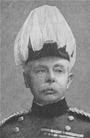
![[Image: kbeb.png]](http://i280.photobucket.com/albums/kk162/MarvinCZ/BAF%20Sig/kbeb.png)
![[Image: dscz.jpg]](http://img193.imageshack.us/img193/1623/dscz.jpg)
![[Image: 19979982.jpg]](http://img197.imageshack.us/img197/5815/19979982.jpg)
![[Image: nsm.png]](http://i280.photobucket.com/albums/kk162/MarvinCZ/BAF%20Sig/nsm.png)
![[Image: gcak.jpg]](http://img94.imageshack.us/img94/1051/gcak.jpg)
![[Image: harvsu.png]](http://i280.photobucket.com/albums/kk162/MarvinCZ/BAF%20Sig/harvsu.png)
![[Image: taui.png]](http://i280.photobucket.com/albums/kk162/MarvinCZ/BAF%20Sig/taui.png)
![[Image: frcl.png]](http://i280.photobucket.com/albums/kk162/MarvinCZ/BAF%20Sig/frcl.png)
![[Image: BAF_1_FltAdm.jpg]](http://i280.photobucket.com/albums/kk162/MarvinCZ/BAF%20Sig/BAF_1_FltAdm.jpg)
![[Image: BAF_2.jpg]](http://i280.photobucket.com/albums/kk162/MarvinCZ/BAF%20Sig/BAF_2.jpg)
![[Image: BAF_3.jpg]](http://i280.photobucket.com/albums/kk162/MarvinCZ/BAF%20Sig/BAF_3.jpg)
![[Image: 1-2.png]](http://i421.photobucket.com/albums/pp297/3077907/1-2.png) </span>
</span>