• OBJECTIVE:Construction of the docking bays, living areas, internal systems and internal comms for Project #86: "Apex Predator". • ASSIGNED APM PERSONNEL:Gregory Collins • AUDIT:Director J.Hammond • STATUS:IN PROGRESS
Brief
The Apex Predator project advances well. The ship design, frame and armor is well underway and nears completion. The rest of the ship construction has been splitted up into several smaller projects as this one. This particular project focuses on the docking bays, living quarters and internal systems of the ship.
Outline:
"DIVIDE VT IMPERES", the philosophy of dividing something seemingly uncontrollable into many small powerless parts. We will be applying this way of thinking for this particular project, as it encompasses a lot of subsystems. The design of the mainframe, docking bays and living quarters will be the 3 major parts we will be working on. Secondary systems and comms are on the specification as well but are, as stated, secondary.
Standing orders
We advise shippers not to begin shipment as of now, as numbers are subject to change in accordance to the needs of other parts of Praesidium.
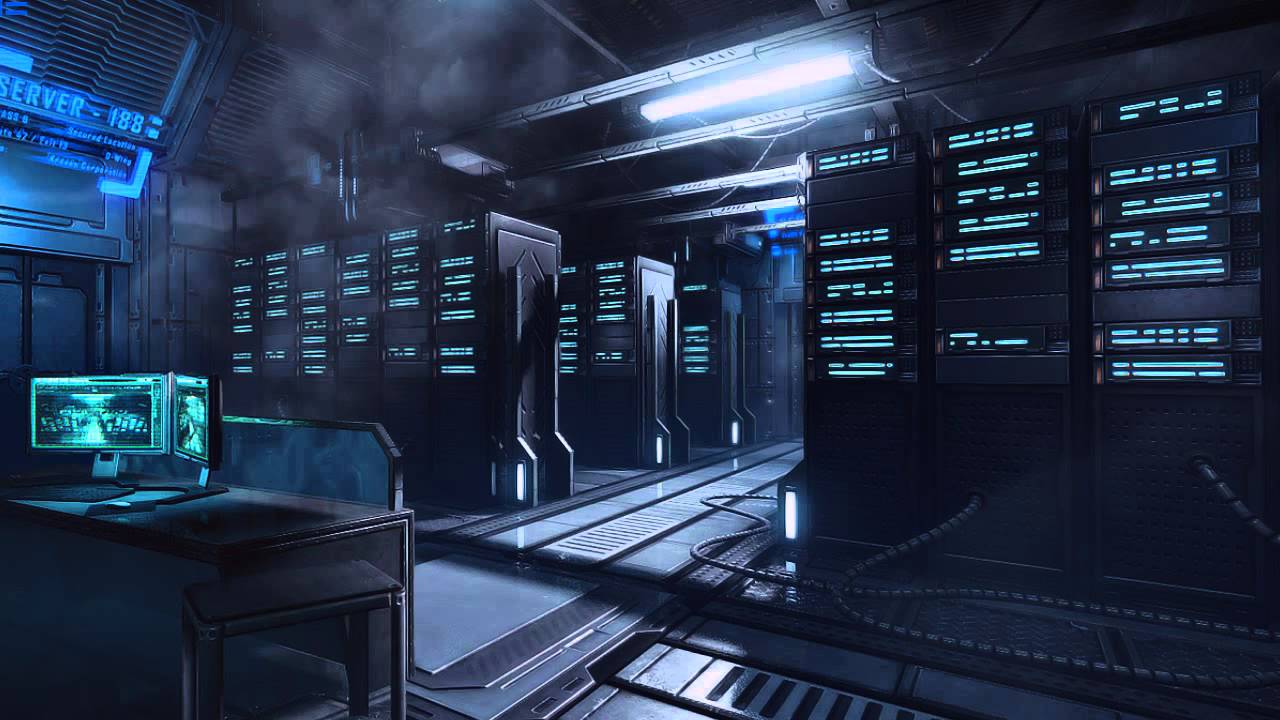
The mainframe is the artificial brain of the vessel. It must be capable to compute many tasks at the same time to remain efficient and offer full assistance in and outside combat situations, be it targeting assistance, heavy ordnance course calculations, or even slingshot manoeuvres around a celestial body. By nature, it must be able to achieve many different tasks, and require different computing cores, each specialized in a certain type of task.
Optronics cores have the ability to reprogram themselves almost instantly, making them a very versatile -and very fast- way of computing. As the data is transmitted through light, there is less heat that needs to be dissipated, thus making optronics-based computers very efficient as well. The usual downsize is, they are much more expensive than standard nano cores relying on electrical current. That is not, however, a problem for our company.
Quantum cores are commonly used when the mainframe is required to execute an algorithm with multiple processes at the same time, that uses a low amount of inputs and outputs.
Bio-neural cores are used in cases where traditional optical cores or even quantum cores would be unable to give an answer. These types of core operate on algorithms based on fuzzy logic, and operate much like a person would think.
Power and heat dissipation components are required to keep the systems at low temperature. A common solution is the implementation of heat sinks, but such sinks need to be discharged at some point to avoid bloating the sink. The hard-to-obtain Gallic Cryocube could be a solution to avoid bloating.
Finally, EMP protection. A pretty basic combat tactic involves sending high static energy charges at the hull of a ship to disable its electronics. There are many solutions to minimize the impact of such charges, but the best one so far has been Plasfoam Conduits. This type of conduit is designed to channel static charges away from critical components into other less important systems of the ship. On top of that, theses conduits are extremely resistant to heat and protect electronics from fire.
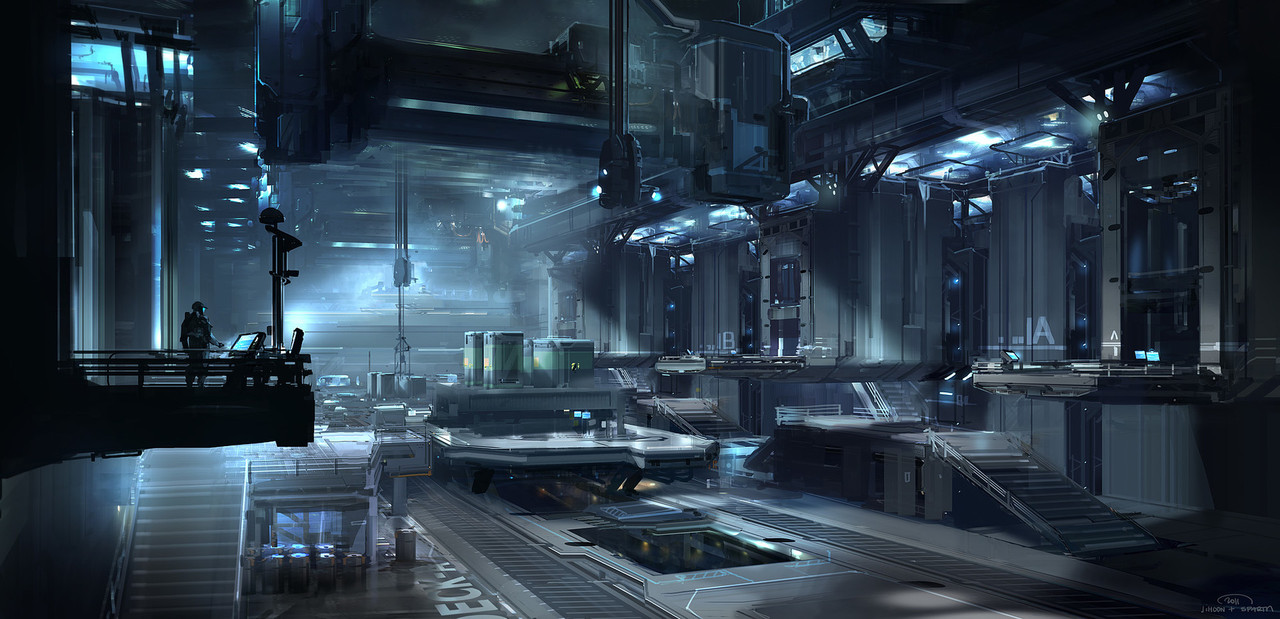
The docking bay plays an important role in any large scale battle, as this is where snub crafts dock and undock during the battle. These rooms must include facilities required to repair, refuel, and restock the lighter crafts during the heat of a battle. This is why we will require quite a large quantity of Industrial and Robotic Hardware, approximately 10000 of each. We will be relying on the trusty Rheinland designs, that are manufactured on Planet Holstein and on the Wuppertal Refinery.
Now, any docking bay is quite an obvious weak spot in any ship design. Despite the great engineers here at APM, the docking bay the Apex Predator is no exception. To prevent any boarding party, neutron radiation emitters will be installed inside each deck, and will activate if any unwanted ship tries to board through there. These emitters are, to put it simply, pipes that run through the frame of the ship from the 2 Mako reactors to collect their natural emission of radiation and redirect them to the docking bays.
As we do not want the whole ship to be irradiated from the docks, it will be necessary to protect the walls of each deck with a special coating that blocks radiation.
The radiation from the reactors is exclusively neutron-based, and this is a good thing because neutron radiation bears no electrical charge (hence the name). This means that it easily penetrates targets, even shielded ones, unless it uses a positron-based shielding technology. But even then, it will still be lethal to anyone on board.
That also means that we cannot contain the radiation by shielding the walls of the deck.
We had to use the same coating as the one in the engine rooms. I had to do some research regarding absorption of neutron radiation to understand the whole process. Firstly, there are several types of neutrons. "Fast neutrons" have a kinetic energy above 1 MeV (which is a lot), and form the bulk of the radiation. We want to slow down these fast neutrons, and for that we must use light atoms. This is similar to billiard, the neutrons being the cue ball and the other atom being a billiard ball. They both have the same mass, so when the cue ball hits the billiard ball, it nearly loses all its speed. On the other hand, if a ping pong ball is thrown against a bowling ball (neutron vs. heavy atom), the ping pong ball will bounce off with very little change in velocity, only a change in direction. That is why lead or other heavy materials used for other radiations are quite ineffective for blocking neutron radiation.
Now that this fast neutron has been slowed down, all is left is to absorb it. There are some atoms that posses a greater cross-section (the likelihood of the atom absorbing a neutron), and Boron is one of them. The greatest advantage of Boron is that it does not creates a high amount of gamma rays when absorbing a neutron, unlike most of the other atoms that have a large cross-section, so there is no need to accommodate for the gamma rays on top of the neutron radiation.
If my calculations are correct, we will need about 5000 units of both materials to cover every deck.


![[+]](/forums/images/collapse_collapsed.png "[+]") Linked projects for reference:
Linked projects for reference:![[Image: rZTDCWQ.png]](http://i.imgur.com/rZTDCWQ.png)
![[Image: Commod_optronics.jpg]](https://discoverygc.com/wiki/images/1/18/Commod_optronics.jpg)
![[Image: Multiplexors.jpg]](https://discoverygc.com/wiki/images/c/cc/Multiplexors.jpg)
![[Image: Bioprocessors.jpg]](https://discoverygc.com/wiki/images/4/43/Bioprocessors.jpg)
![[Image: Cryocubes.jpg]](https://discoverygc.com/wiki/images/3/30/Cryocubes.jpg)
![[Image: Plastifoam_conduit.jpg]](https://discoverygc.com/wiki/images/7/7f/Plastifoam_conduit.jpg)
![[Image: Industrialmat.jpg]](https://discoverygc.com/wiki/images/b/be/Industrialmat.jpg)
![[Image: Robotichard.jpg]](https://discoverygc.com/wiki/images/0/07/Robotichard.jpg)
![[Image: Beryllium.jpg]](https://discoverygc.com/wiki/images/2/27/Beryllium.jpg)
![[Image: Boron.jpg]](https://discoverygc.com/wiki/images/a/a2/Boron.jpg)